
THE ART OF STAYING ORGANIZED: MADDIE ON SYSTEMS, CLIENTS, AND CONSISTENCY
As part of our ongoing series spotlighting the people behind Bellwether Concepts, we sat down with Maddie, whose career in marketing began with a degree in Business Marketing from Georgia College & State University and a part-time opportunity that would eventually grow into a career in social media. After meeting her now boss and mentor, Lizzie Pritchett, Maddie quickly found her place in the industry and continued to grow within the company. From the systems she uses to stay organized to the importance of treating clients like people, Maddie shares what she’s learned about staying ahead, building trust, and helping a team run smoothly.
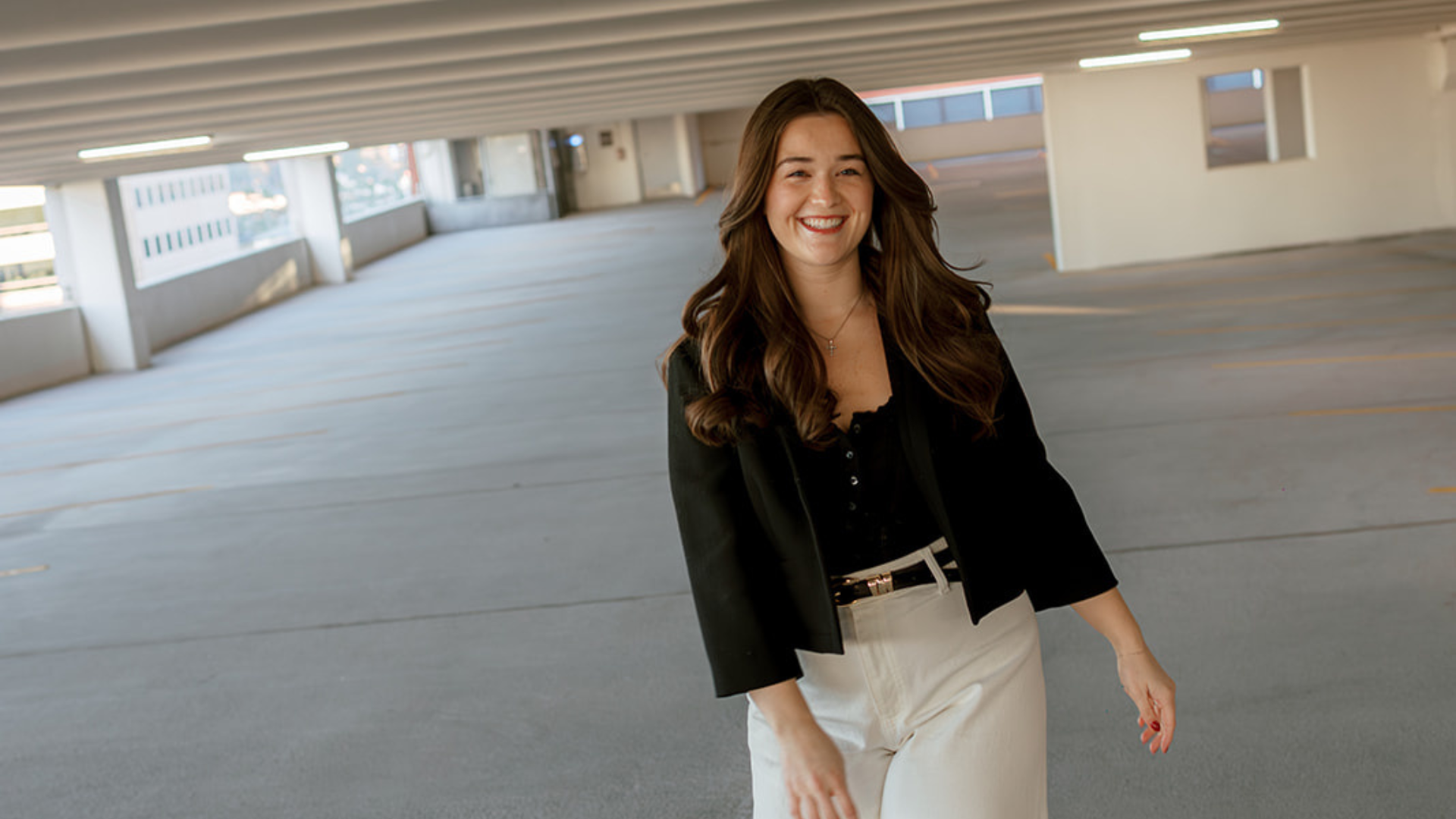
Thank you for joining us. Before we get into your process, our readers would love to get to know you. Can you tell us a bit about yourself and how you found your way into this industry?
I really believe that everything happens for a reason, and my career has definitely taken a few unexpected turns. I graduated from Georgia College & State University in 2022 with a Bachelor of Business Administration in Business Marketing. I originally thought I wanted to work for a youth organization, but I ended up working at a wedding venue after graduation.
That’s where I met my now boss and mentor, Lizzie Pritchett, who was doing social media for the venue. We instantly connected, and I eventually started working part-time for her. That really became the start of my career in social media marketing.
Over the years, I’ve gotten to work with all kinds of businesses and learn a lot about strategy, content, and client relationships. Today, I’m the COO of Bellwether Concepts, where we help small businesses grow through social media and marketing. I’m proud of the work we’re doing and excited for what’s ahead.
With so many clients on your plate at once, what do you think is most important when it comes to managing that volume without losing the personal touch?
For me, the biggest thing is remembering that every client is a real person and a real business, not just another task on my list. When you manage a lot of accounts, it can be easy for things to become transactional. You check the box, send the email, finish the post, and move on to the next thing. I never want our clients to feel that way.
One of the ways I make sure that doesn't happen is by keeping a one-sheet for every client. I keep track of the little details, not just the big project information. How they like to communicate, what's happening in their business, things they've mentioned personally, or anything else that helps us better understand who they are. Those small details make a huge difference.
I also believe in checking in even when nothing is wrong. You shouldn't only reach out to a client when you need something from them or when there's a problem. Sometimes just making sure they're happy and seeing how things are going can go a long way.
At the end of the day, we're an extension of their business, not just a vendor. Great work is important, but I think the feeling of being taken care of is what really builds long-term relationships. When a client feels remembered and cared for instead of just managed, everything else becomes easier.
Based on your own experience, can you share "5 systems that keep me organized"? Please share a story or example for each.
1. Asana is my master task list.
Every task goes into Asana as soon as I think of it or someone asks me to do something. I also use recurring tasks for things I do every week, so I don't have to rely on my memory.
2. I plan content ahead of time.
Our content calendars help us plan weeks ahead instead of scrambling for ideas. We also track things like what has already been posted and what still needs to go out.
3. I keep important information in one place.
I have one Google Sheet for passwords and a BWC To-Do List where I keep notes throughout the week. Every Monday, I organize those notes and prepare for our team meeting.
4. I keep my inbox and content organized.
I delete spam immediately, respond to emails I can handle right away, and if I need to come back to something later, I open it and mark it as unread so I know to revisit it.
5. I have a consistent weekly routine.
Each day has a general focus, from reviewing accounts and preparing for meetings to creating content and reviewing upcoming posts. I also have a lot of recurring tasks set up in Asana that remind me daily and weekly what needs to get done. Having that structure helps me stay ahead and know what needs to happen.
Can you walk us through what a typical week looks like for you, from how a task first lands on your plate to how it gets done?
I love a good to-do list, so my process really starts with getting something out of my head and into a system. As soon as a task lands on my plate, it goes into Asana with a due date. I have learned that if I try to remember everything myself, something will eventually get missed.
My week has a pretty consistent rhythm, which helps me stay organized. Mondays are focused on reviewing accounts, uploading blogs, checking comments and messages, and preparing for our team meeting. Tuesdays are usually one-on-one meetings, while Wednesdays give me more time to focus on the creative side and work on content. Fridays are when I review posts for the next couple of weeks to make sure everything is accurate and meets BWC standards.
You mentioned that you never want to leave a client wondering what's happening. Can you say more about why that matters so much to you, and how you put it into practice?
I personally love having all of the information I need to get something done correctly, so I try to give that same experience to the people I work with. I think it's frustrating for anyone to be waiting on that "one thing" they need before they can move forward with a project or task.
That's why one of my biggest rules is to never make a client wonder what's happening. Instead of saying, "I'll look into it," I want to give them a clear idea of what I'm looking into and when they can expect to hear back from me. Even if I don't have the answer yet, they should know that I'm working on it.
I think specificity and communication create trust. If a client knows what is happening and when they will hear from you, they don't have to wonder if their question was forgotten or where something stands.
I also think being proactive is a huge part of good customer service. I want to catch something before a client has to point it out to us. I want to check in even when nothing is wrong. And I want our clients to feel like we're paying attention to their business, not just responding when they ask us something.
At BWC, we're not a traditional customer service company, but almost everything we do involves customer service because almost everything we do touches a client relationship. How we communicate matters just as much as the work itself.
What's something you've learned from watching how other people on the team work that changed how you do things?
I genuinely love our team. They are all rockstars, and one of my favorite things about working together is seeing how everyone has different strengths.
We've started doing little team "classes" after our weekly team meetings where someone on the team gets to teach the rest of us about something they're really good at or have learned through their experience. I love this because it gives everyone a chance to share what they know, and it has honestly helped sharpen all of our skills.
I've learned so many little things from these classes that I now use in my own work. One example is something Kendall taught us about finding stock footage. She showed us that adding "UGC" to a stock footage search can help you find content that feels more natural and realistic, almost like something a person actually captured on their phone, instead of that very obvious stock-content look.
It's a small tip, but it's a great example of why I love learning from the people around me. Everyone on our team has something they do really well, and when we share those things with each other, the whole team gets better.
What is one piece of advice you would give to someone just starting out who wants to become the kind of person their team and clients can rely on?
I’ve always believed in the power of saying yes. When I was in high school, I was really impacted by a mentor who shared how saying yes to opportunities had changed her life and allowed her to impact so many others.
My advice would be to not be afraid to say yes, especially early in your career. Say yes to opportunities that challenge you, help someone else, or push you outside of your comfort zone. You never know where one yes might lead or who it might impact.